In a small hotel, the person who notices a problem isn’t always the person who can fix it. A guest spots a loose fitting in their room, a breakfast team member finds a faulty toaster, or a housekeeper sees a stain developing on a ceiling. If reporting means finding the right manager, writing an email or remembering it until the end of a shift, useful information can easily be delayed or lost.
Hotel QR codes give people a direct route to report what they’ve seen from the place where they’ve seen it. Used well, they can support maintenance reporting, guest feedback, staff observations and everyday improvements without filling the hotel with paperwork.
Why QR reporting suits a small hotel
Hotels contain many different reporting points: bedrooms, bathrooms, corridors, reception, dining areas, kitchens, car parks and staff-only spaces. Each area has its own common issues, and several groups of people may notice them.
A guest might want to comment on their room. A housekeeper may need to report a damaged fitting. A breakfast employee could identify a recurring equipment fault. A contractor may find a problem while carrying out planned work.
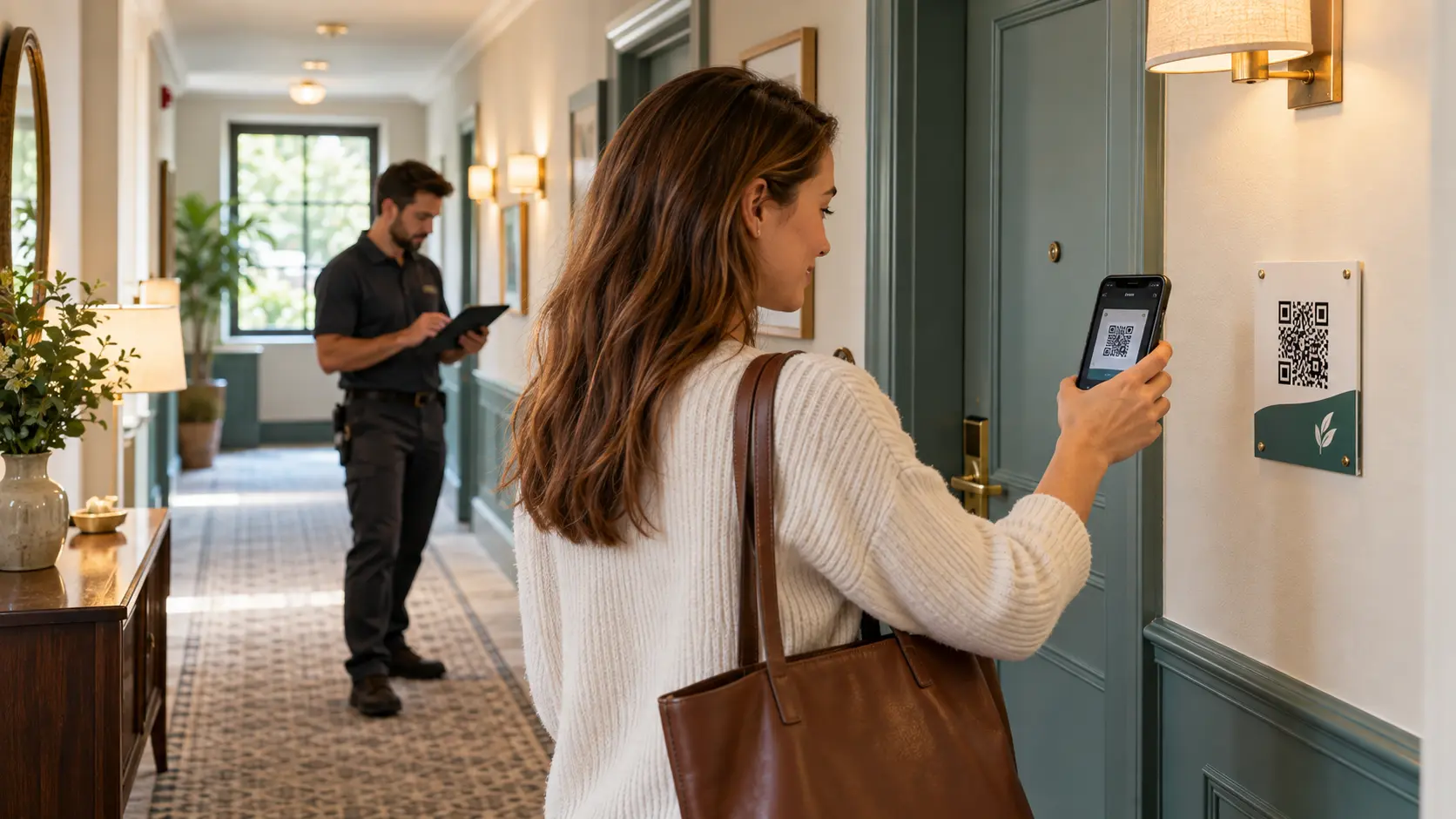
Putting a QR code near the relevant area gives each person a simple starting point. The reporter scans it with a phone, opens a short form and submits the details. They don’t need a reporter account or a separate app.
Use different QR codes for different hotel areas
One general QR code at reception can help, but it still asks the reporter to explain exactly where something happened. Location-specific codes make that clearer from the start.
A 30-room hotel, for example, could use QR reporting points in several places:
- a discreet code in each bedroom for room maintenance and guest comments;
- a breakfast-room code for service feedback and dining-area concerns;
- a staff-only kitchen code for defects, supply issues and improvement ideas;
- a reception code for general feedback, complaints and compliments;
- a code near the hotel entrance or car park for external maintenance issues.
The location linked to the code provides useful context. When someone reports a problem from Room 12, the manager shouldn’t have to search through the description to work out which room needs attention.
You can read more about using location-based reporting on the facilities management page and the wider QR code reporting page.
Make hotel maintenance easier to report
Small maintenance problems can affect a guest’s stay and become more expensive if they aren’t dealt with. QR codes can provide a consistent route for reporting issues such as:
- damaged furniture, fittings or door furniture;
- poor lighting or failed lamps;
- plumbing leaks and drainage problems;
- heating or ventilation concerns;
- faulty bedroom equipment;
- damaged decoration, flooring or signs;
- external access, parking or grounds issues.
The form can ask for a short description and, where suitable, allow supporting evidence. The resulting report can then be reviewed by an authorised user, assigned and managed as a case.
QR reporting doesn’t replace planned inspections, statutory checks or direct action when there’s an immediate danger. Staff should still know how to escalate urgent issues straight away. It adds an accessible record for everyday matters that need review and follow-up.
Collect guest feedback while it’s still useful
Many hotels ask for feedback after checkout, when the chance to improve the current stay has already passed. A well-placed QR code lets a guest raise a comment while the hotel may still be able to respond.
That could include a problem with the room, a request for assistance, a comment about breakfast or a compliment for a member of staff. Feedback forms should make it clear what they’re for and shouldn’t replace reception or emergency contact arrangements.
Timing matters. A small card in the room may gather useful comments during the stay. A breakfast-area code can collect feedback about that service. A reception code can provide a general route for visitors who prefer not to raise a point face to face.
Good feedback isn’t limited to complaints. Compliments can help managers recognise strong service and share examples of what’s working well. See the customer feedback page for more ways to give guests a clear reporting route.
Give hotel staff a practical internal route
Staff often see repeated problems before management sees the pattern. Housekeeping, reception, catering and night teams each have a different view of the hotel.
Staff-only QR codes can help them report:
- equipment faults and low-level maintenance needs;
- repeated guest comments;
- missing supplies or recurring delivery issues;
- housekeeping concerns;
- process problems between departments;
- practical ideas that could improve service or save time.
The code should be placed where the work happens, not hidden on a noticeboard in a distant office. A kitchen reporting point belongs in an appropriate staff area. A housekeeping code might sit in the linen room or staff store. Placement reduces the gap between noticing and reporting.
Set up forms around the information you need
Different reporting points don’t always need the same questions. A guest-facing form should use plain language and stay short. An internal maintenance form may need more detail about the asset, urgency or effect on operations.
Start by deciding:
- Who will scan this code?
- What types of report should it accept?
- Which site and area does it relate to?
- Who should review the resulting cases?
- What should happen if the matter is urgent?
Avoid creating so many categories that people can’t choose confidently. Broad, recognisable options such as maintenance, cleanliness, service, complaint, compliment and improvement idea are often easier to use. The exact choices should reflect how the hotel works.
Turn reports into improvements
Collecting reports is only useful if someone reviews them and decides what happens next. The hotel needs a clear routine for checking new cases, setting priorities, assigning actions and recording the outcome.
A single report may identify a straightforward repair. Repeated reports can reveal a wider issue, such as the same room defect returning, frequent breakfast delays or a confusing guest instruction. Looking at those patterns helps the manager decide whether a repair, process change, replacement or staff briefing is needed.
It’s also sensible to check the physical QR points during routine hotel inspections. Replace damaged or missing signs, confirm they still open the intended form, and make sure guests and staff can scan them easily.
Start with a few useful reporting points
A small hotel doesn’t need to cover every surface with QR codes. Begin with the areas where reports are most useful, such as bedrooms, breakfast, reception and one staff-only work area. Keep the forms focused, explain the route to employees, and review how the first reports are handled.
Once the process works, add further locations where they solve a clear reporting problem. The aim is simple: help the right person receive useful information early enough to act on it.